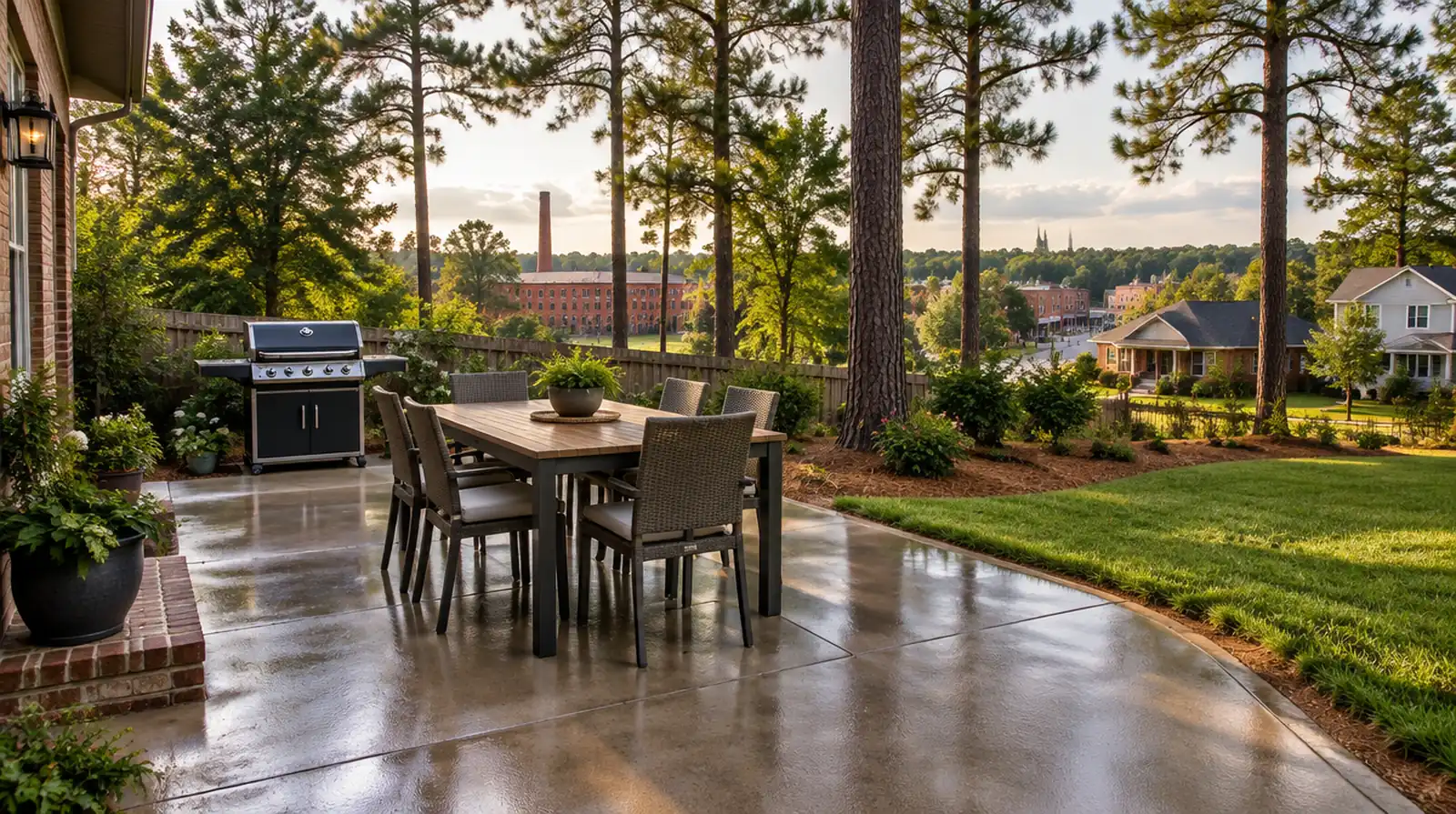
Why seal outdoor concrete
Exterior concrete lives a rough life in the Carolina Piedmont. Heavy summer rains soak in and carry dirt and clay into the surface. Humidity and shade encourage mildew and algae, especially on north-facing walks and pool decks under trees. Pine needles and pollen stain the slab, and the occasional winter freeze can pop small flakes off concrete that has absorbed water. Sealing reduces how much water and dirt the slab absorbs, which slows staining, mildew growth and surface wear.
Types of sealers
- Penetrating sealers: silane and siloxane products that soak in and repel water without changing the look. Best for driveways, walks and anywhere slip resistance matters.
- Acrylic sealers: film-forming sealers that add a wet look or satin sheen and enhance color. Popular on stamped and decorative patios.
- Polyurethane and polyaspartic sealers: tougher, longer-lasting films for covered porches and high-wear areas.
We choose the sealer based on the surface, how it is used and the look you want, and we explain the tradeoffs between appearance, grip and lifespan.
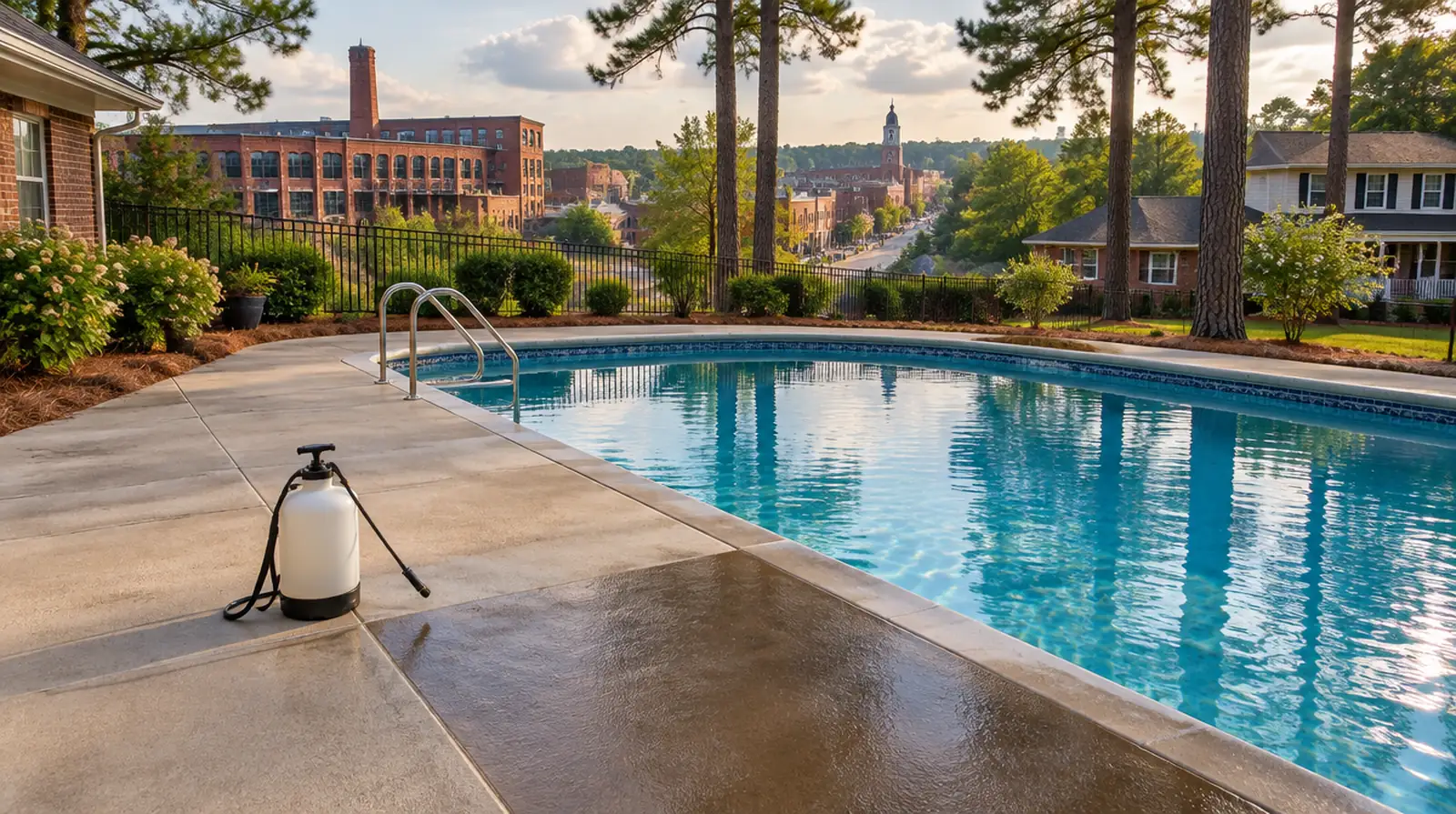
Preparation
Sealer locks in whatever is on the surface, so cleaning is critical. We pressure wash with surface cleaners, treat mildew and algae, and use degreasers on oil or grill stains. Old peeling sealer is stripped so the new product can bond. Cracks are cleaned and filled, and joints can be resealed with flexible caulk to keep water from getting under the slab. The concrete must be dry before most sealers go on, so we schedule around the weather.
Pool decks and patios
Pool decks need a sealer that will not become slick when wet. We use penetrating sealers or add a slip-resistant additive to film sealers so the surface stays safe for bare feet. Sealing also helps protect the deck from pool chemicals and makes it easier to rinse off leaves and pollen. Patios with stamped or colored concrete benefit from an acrylic sealer that brings back the color and adds protection.
Sidewalks, steps and porches
Front walks and steps see foot traffic, sun and rain every day. A penetrating sealer keeps them looking cleaner without changing the texture. Covered porches can take a tougher film sealer or even a coating, since they are protected from direct weather. If you want a more finished look on a porch, ask about a flake system with a UV-stable topcoat.
How often to reseal
Penetrating sealers typically last several years before reapplication. Acrylic film sealers on patios usually need refreshing every two to three years, depending on sun and traffic. We note the products used on your job and can set a reminder so your concrete stays protected.
Commercial sealing
Businesses with sidewalks, plazas, dumpster pads and parking areas can benefit from sealing too. It keeps entrances looking clean for customers and reduces staining from gum, oil and spills. We can schedule work around business hours to keep walkways open.
Signs your concrete needs attention
If water soaks in quickly instead of beading, if mildew keeps coming back, or if the surface is starting to look dull, stained or flaky, it is time to clean and seal. Bigger problems like wide cracks, sunken slabs or heavy scaling may need repair first. For driveways in rough shape, see our driveway coating service, which combines cleaning, repairs and resurfacing.
Planning the job
Most residential sealing projects are completed in one or two days, plus drying time. You will need to keep foot traffic off for a few hours and vehicles off for a day or more, depending on the sealer. Send us photos and approximate square footage, and we will put together a written quote.
to get your concrete sealed.
Call (839) 275-5455 for a free estimate.