How metallic floors get their look
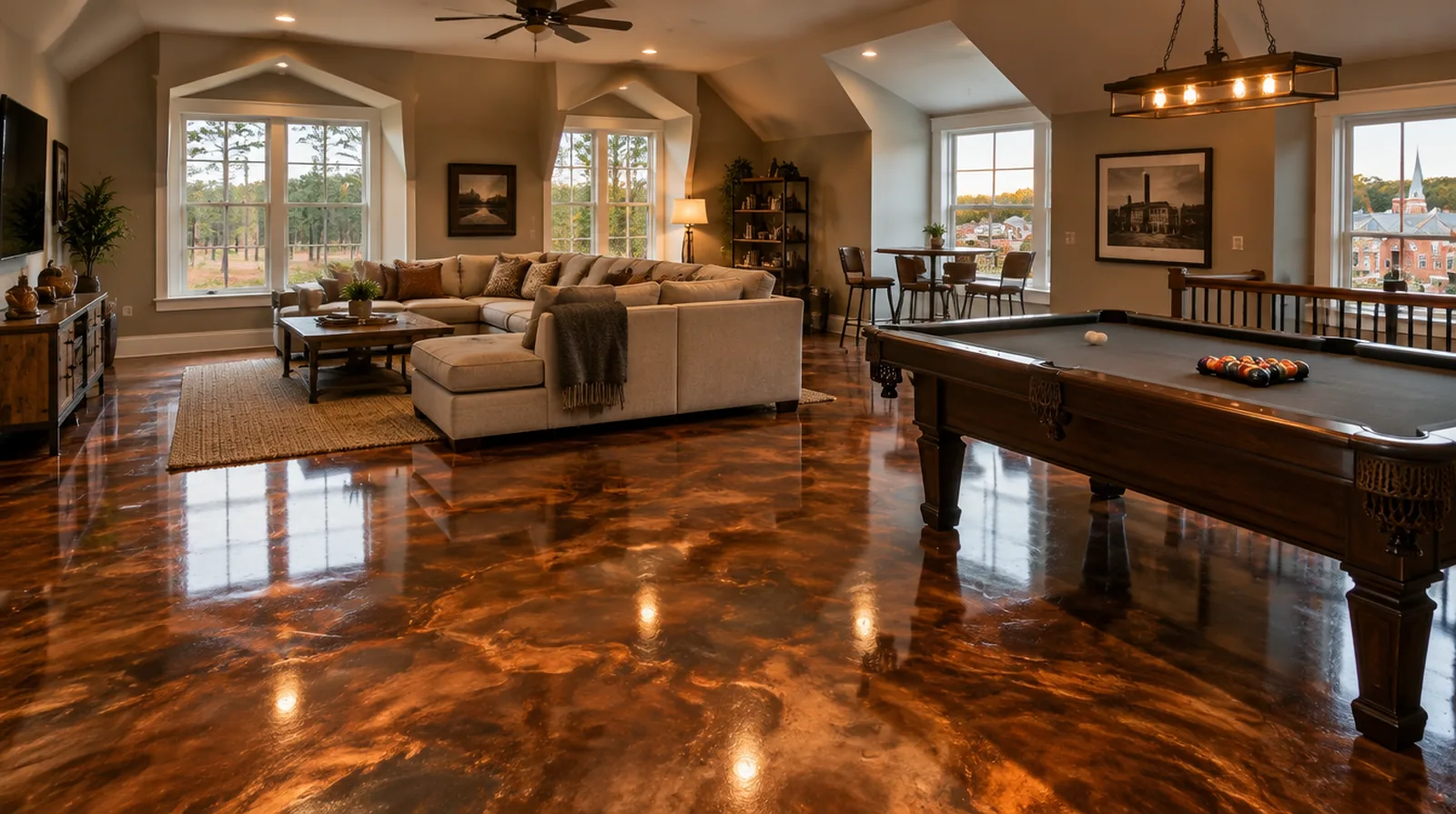
Metallic epoxy uses fine mica-based pigments mixed into a clear resin. When the resin is spread across a primed floor, the installer manipulates it with rollers, trowels, brushes or a light mist of solvent. The pigment particles drift and settle as the resin levels, creating ripples, clouds and veins that catch the light differently from every angle. The final effect can resemble polished stone, moving water or brushed metal, depending on the colors and techniques we use.
No two metallic floors come out the same, even with identical products. That is part of the appeal. We talk through the look you want, show you photos and samples of past work, and plan the color layers and technique before the job starts so the result lands close to what you pictured.
Spaces that suit metallic
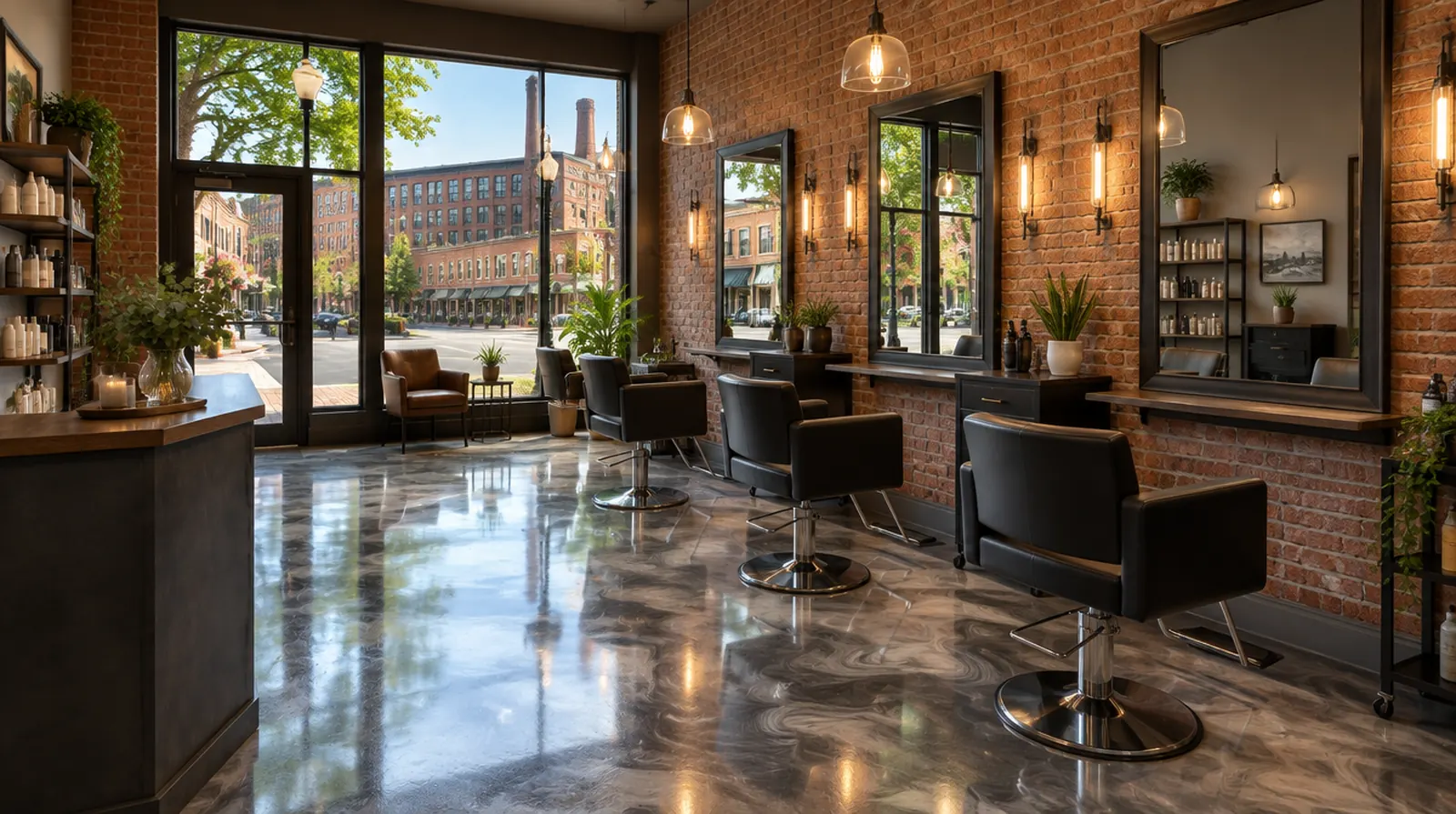
Metallic floors shine in rooms where looks matter as much as toughness. Bonus rooms over garages, finished basements, home theaters, game rooms and home bars are common residential projects. Commercially, we install them in salons, boutiques, galleries, restaurants, dealership showrooms and office lobbies. A converted mill space with brick walls and big windows pairs especially well with a metallic floor in deep gray or bronze.
Metallic is usually not our first suggestion for a working garage. It is smoother and shows dust more than flake, and heavy traffic dulls the gloss sooner. Some customers still choose it for a showpiece garage, and we can add a textured topcoat to help with grip if you do.
Preparation for a flawless finish
Metallic epoxy is a thin, glossy layer that shows every bump beneath it. That makes prep even more important than usual. We diamond grind the floor, fill cracks and joints, and skim-coat rough or uneven areas so the surface is smooth and level. On wood-framed bonus rooms we confirm the subfloor is suitable before going any further. A moisture test comes first on basements and slabs on grade, since vapor pushing through can cause bubbles in a clear finish.
The layers
- Primer: seals the concrete and controls outgassing so the metallic layer stays bubble-free.
- Base color: a solid tinted coat that supports and enriches the metallic tones above it.
- Metallic layer: the decorative resin, worked by hand while it levels.
- Topcoat: a clear urethane or polyaspartic to protect against scratches and add gloss or satin sheen.
Color ideas
Charcoal with silver highlights looks sleek in modern homes. Bronze, copper and champagne tones warm up a basement or bar. Ocean blues and teal create a calm, water-like effect in a studio or spa. For businesses we sometimes match brand colors or blend two tones to create a subtle pattern that guides customers through the space. Bring us pictures you like and we will tell you what is achievable on your floor.
Care
Use soft dust mops and microfiber pads rather than stiff brooms, and clean with a pH-neutral cleaner. Put felt pads under furniture legs and mats at entry doors to catch grit, which is the main thing that scratches a glossy surface. Over time, a worn topcoat can be lightly abraded and recoated to restore the shine without disturbing the metallic layer underneath.
Timeline and cost
A metallic floor takes a little longer than a standard garage coating because of extra prep and the hand work involved. Many residential rooms are done in two or three days, plus cure time before furniture goes back. Cost depends on the size of the space, the condition of the concrete and the number of colors. We give a detailed written quote after seeing the room.
Is metallic right for you?
If you want a statement floor that feels custom and you are willing to give it a little more gentle care, metallic is hard to beat. If the room sees heavy tools, hot tires or lots of grit, a flake floor or polished concrete may serve you better. We are happy to compare options during the visit.
to plan a metallic floor.
Call (839) 275-5455 for a free estimate.