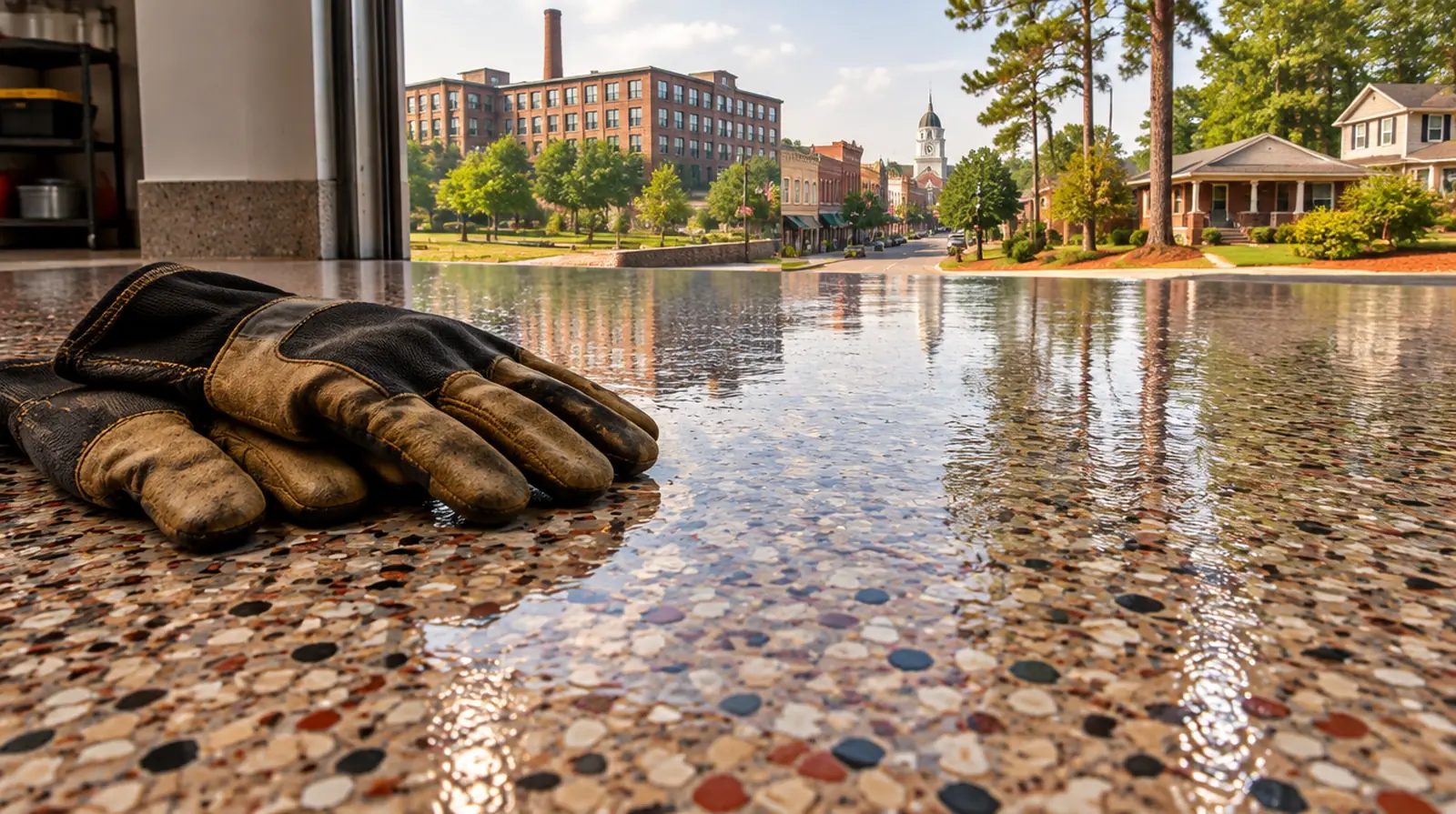
What a flake floor is
A flake floor starts like any good epoxy installation: the slab is ground, repaired and primed. While the colored base coat is still wet, we broadcast small vinyl chips across the whole floor until no more will stick. After the base cures, we scrape and vacuum away the loose chips, then seal the surface with a clear topcoat. The result is a dense, speckled finish that looks a bit like terrazzo or granite and has a gentle texture underfoot.
Because the chips cover every inch, the floor is thicker than a solid color coat and much better at hiding small flaws in the concrete. Dust, pollen and dried leaves blend into the pattern, so the floor looks clean longer between sweepings. That combination of durability and forgiving looks is why flake is the most common system we install in garages around town.
Why prep still matters
The chips are only as good as the base coat holding them, and the base coat is only as good as its bond to the concrete. Every flake floor we build starts with diamond grinding to remove weak surface paste and any sealer the builder applied. We repair cracks and pitted areas, check moisture, and prime with a penetrating epoxy. Skipping these steps is how flake floors end up peeling in sheets, usually starting under the tires where heat and friction are highest.
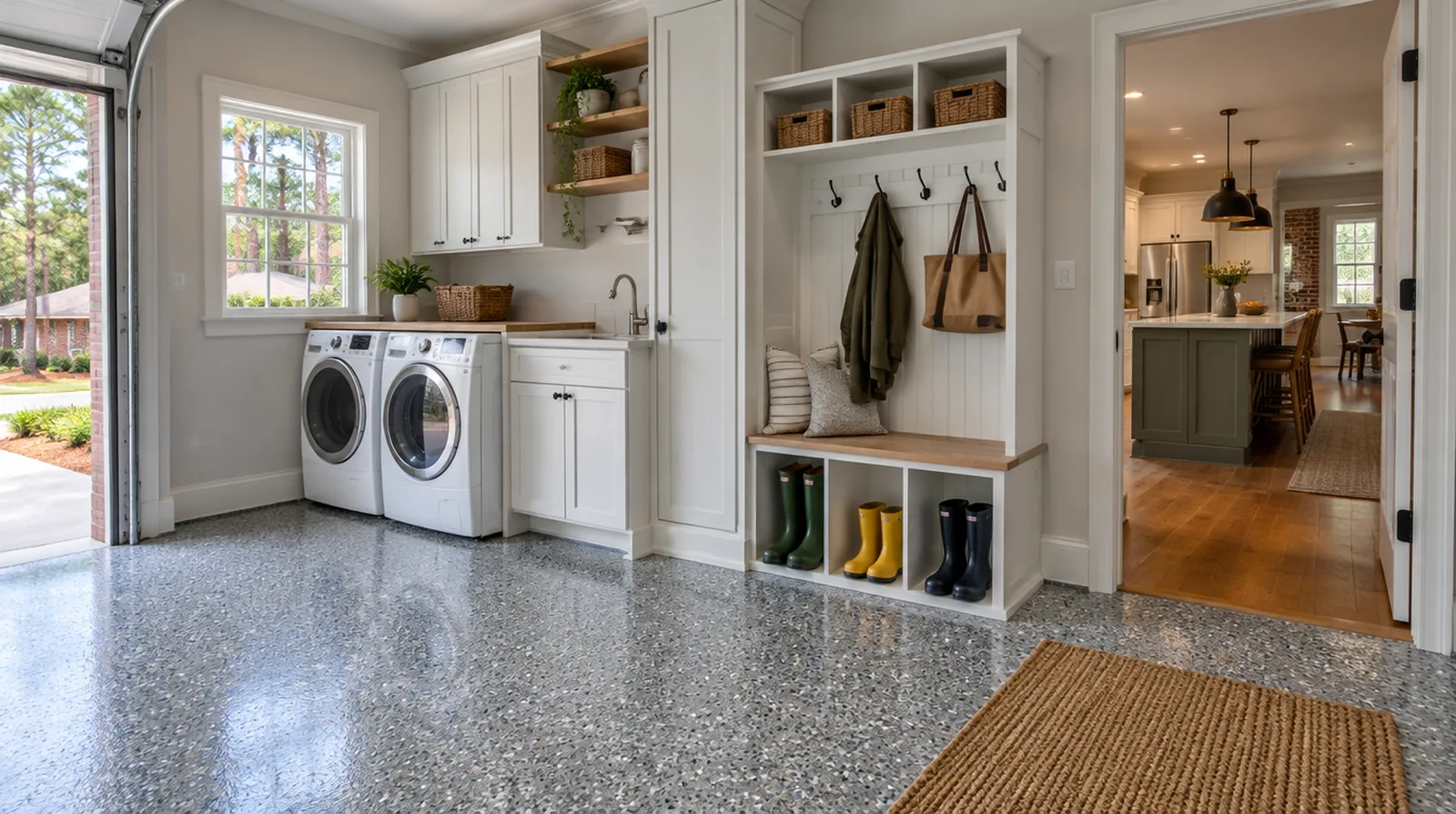
Choosing chip size and color
Flake comes in several sizes. Quarter-inch chips create a bold, busy pattern that hides almost anything. Smaller eighth-inch or sixteenth-inch flakes give a finer, more uniform look that many people like in laundry rooms and finished spaces. Blends are where the personality comes in. Earthy mixes with tan, brick red and brown are practical in a part of the country where red clay is everywhere. Gray and white blends brighten a garage with little natural light. Black, gray and blue mixes give a sporty look that pairs well with dark cabinets.
We bring sample boards to every visit and set them on your floor under your own lights. Colors shift between daylight and LED shop fixtures, and seeing them in the actual room is the best way to choose.
Topcoat options
- Polyaspartic: fast cure, strong UV resistance and a hard, glossy finish. Our usual choice for garages that get afternoon sun.
- Urethane: excellent scratch and chemical resistance, a good choice for shops and workrooms.
- Textured topcoat: either option can include a fine aggregate for extra grip near doors and ramps.
Where flake works well
Garages are the obvious fit, but flake floors also do well in mudrooms, laundry rooms, basements, workshops, covered porches and screened patios. In commercial settings they are common in break rooms, locker rooms, small retail spaces, veterinary clinics and car washes. Anywhere that sees water, dirt and steady foot traffic can benefit from a floor that is easy to clean and does not show every speck.
Outdoor uncovered concrete is a different story. Direct sun and standing water are tough on any coating, so for open patios and pool decks we often point people toward penetrating sealers instead.
Durability you can count on
A properly installed flake floor shrugs off hot tires, dropped tools, lawn chemicals, road grime and the occasional oil spill. The chips add impact resistance, and the clear topcoat takes the wear. When the topcoat eventually dulls after years of traffic, it can be lightly sanded and recoated without starting over. That renewability is one reason flake floors are such good long-term value.
Timeline for a flake floor
Most garages are finished in one or two days. Day one covers grinding, repairs, primer and the base coat with flake. Day two is scraping, vacuuming and the clear topcoat. You can usually walk on it the following day and park after a few more, depending on temperature and the products used. Cooler fall and winter days stretch those windows a bit, while hot summer days shorten them.
Care and cleaning
Blow or sweep off grit, then mop with warm water and a mild cleaner when needed. A soft deck brush helps on textured topcoats. Wipe chemical spills promptly, and protect the floor from sharp metal stands with a square of plywood. That is about all the maintenance a flake floor asks for. Want something smoother and more decorative? Take a look at metallic epoxy, or see how we approach whole-garage projects.
to talk about a flake floor.
Call (839) 275-5455 for a free estimate.