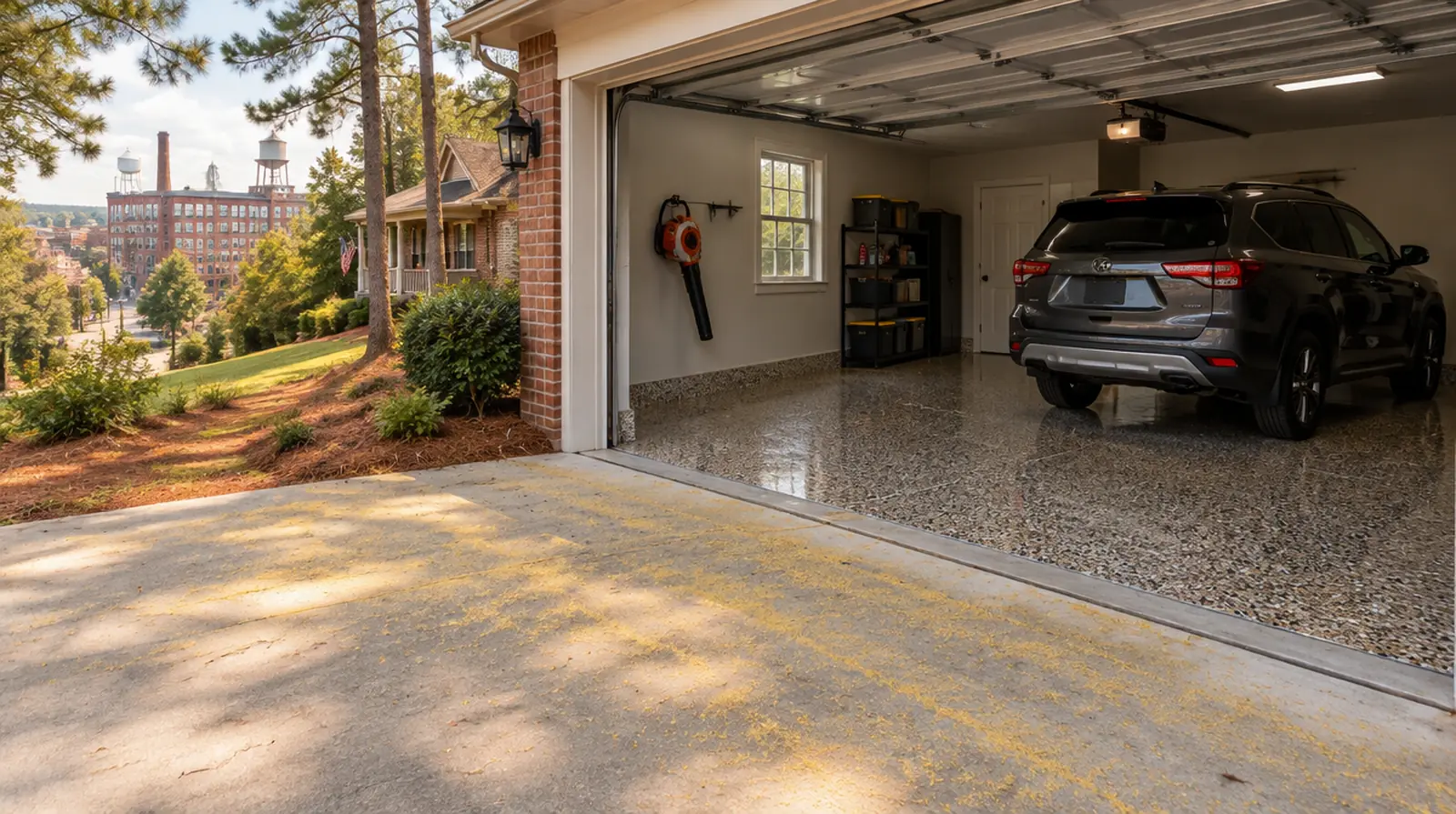
What a bare garage floor goes through
A garage in the Piedmont collects a little bit of everything. In spring the pollen drifts in every time the door goes up and settles into the low spots. In summer, storms soak the driveway and tires carry a film of red clay inside, where it dries into an orange haze. Cars drip oil and coolant, lawn equipment leaks fuel, and bags of fertilizer leave rust-colored rings. Because concrete is porous, each of those spills soaks in instead of sitting on top. Over a few years the floor turns blotchy, the surface starts to dust, and no amount of pressure washing brings it back.
The ground under many slabs here is dense clay that holds water after a wet spell and pulls away from the concrete in a dry August. That movement shows up as hairline cracks that wander across the garage. They are usually harmless structurally, but they collect dirt and let moisture travel to the surface. A properly built coating seals the face of the slab, and the cracks we repair beforehand stop being a place for grime to hide.
Grinding is not optional
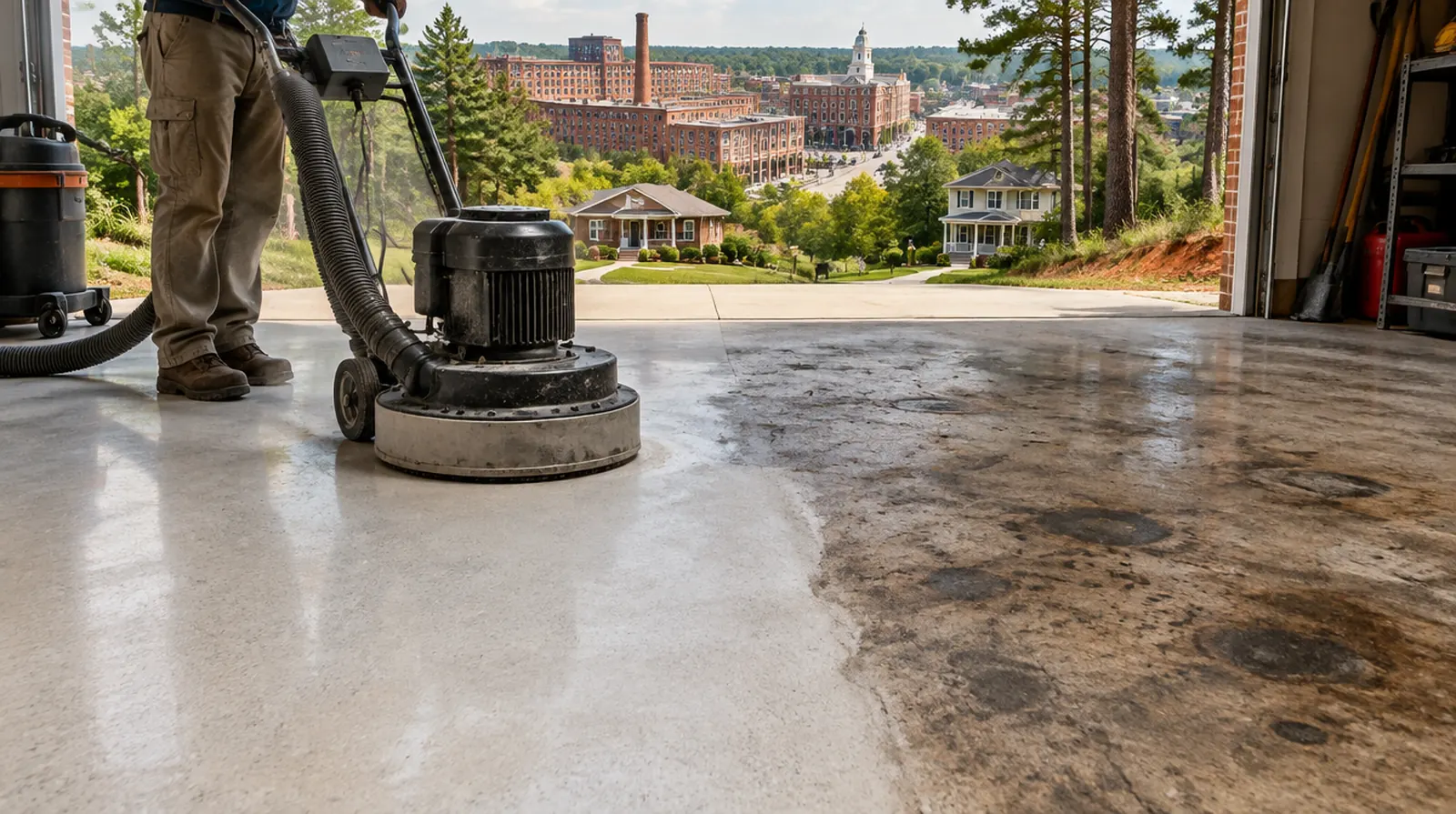
Most failed garage floors we see were acid etched or simply cleaned and rolled. That leaves a slick surface with little for the coating to hold onto, and hot tires eventually pull it loose. We grind every garage with a diamond grinder hooked to a HEPA dust collector. Grinding removes the weak cream layer on top of the slab, cuts away sealers and paint, and leaves a profile that feels like medium sandpaper. That texture is what lets an epoxy primer soak in and lock on.
After grinding we turn to repairs. Cracks are chased with a blade and filled with a semi-rigid or flexible filler, depending on whether they still move. Pits near the garage door, broken edges at control joints and spalled patches from old freeze damage are rebuilt with a fast-setting repair mortar and ground flush. Oil-soaked spots are degreased and, when they will not come clean, sealed with a primer designed to bond over residual contamination.
Testing for moisture
A humid climate means many slabs carry more water than you would expect, especially new construction and older garages poured without a vapor barrier. Water vapor pushing up from below can blister a coating that was perfectly applied. We test every slab before quoting. When the readings call for it, we use a moisture-tolerant primer made to handle vapor drive, which costs a bit more but saves you from a floor that bubbles a year later.
Layers in a garage system
- Penetrating primer: soaks into the freshly ground concrete and forms the anchor for everything above it.
- Pigmented base coat: builds thickness and sets the background color.
- Flake broadcast: vinyl chips spread to rejection for texture and pattern, or skipped for a solid finish.
- Clear topcoat: polyaspartic or urethane that resists hot tires, chemicals, scuffs and fading.
Most two-car garages take one or two days. Foot traffic is usually fine the next day, and vehicles can come back a few days later, with exact times depending on temperature and products.
What you gain
A coated garage is simply easier to keep. A quick pass with a leaf blower clears pollen and leaves. Oil, antifreeze and fertilizer spills wipe up with a rag. The lighter, reflective surface bounces light around, which makes a difference if you work on cars or projects in the evening. And when it is time to sell, a finished garage floor stands out in listing photos and walkthroughs.
Plenty of our customers treat the garage as an extra room. It holds a second fridge, a home gym, a workbench or a couple of chairs for tailgating with the door open. A clean, sealed floor makes that space feel like part of the house instead of a dusty storage area.
Color and grip
Warm blends with tan, brown and a touch of red disguise clay dust between cleanings, which is why they are popular here. Gray, black and white mixes give a cleaner modern look. For homes where people walk in from the rain, we can add a fine aggregate to the topcoat so the floor is less slick underfoot. Sample boards come to every visit so you can judge colors under your own lights.
Keeping it looking good
Sweep or blow the floor off regularly, mop with a mild cleaner, and wipe spills before they dry. Slide a scrap of plywood under motorcycle kickstands and jack stands that will sit for a while, and avoid dragging steel equipment across the surface. With those habits a well-installed garage floor stays attractive for many years. If your current coating is already lifting, see our repair service, or compare a fast-cure polyaspartic option.
to book your garage floor quote.
Call (839) 275-5455 for a free estimate.