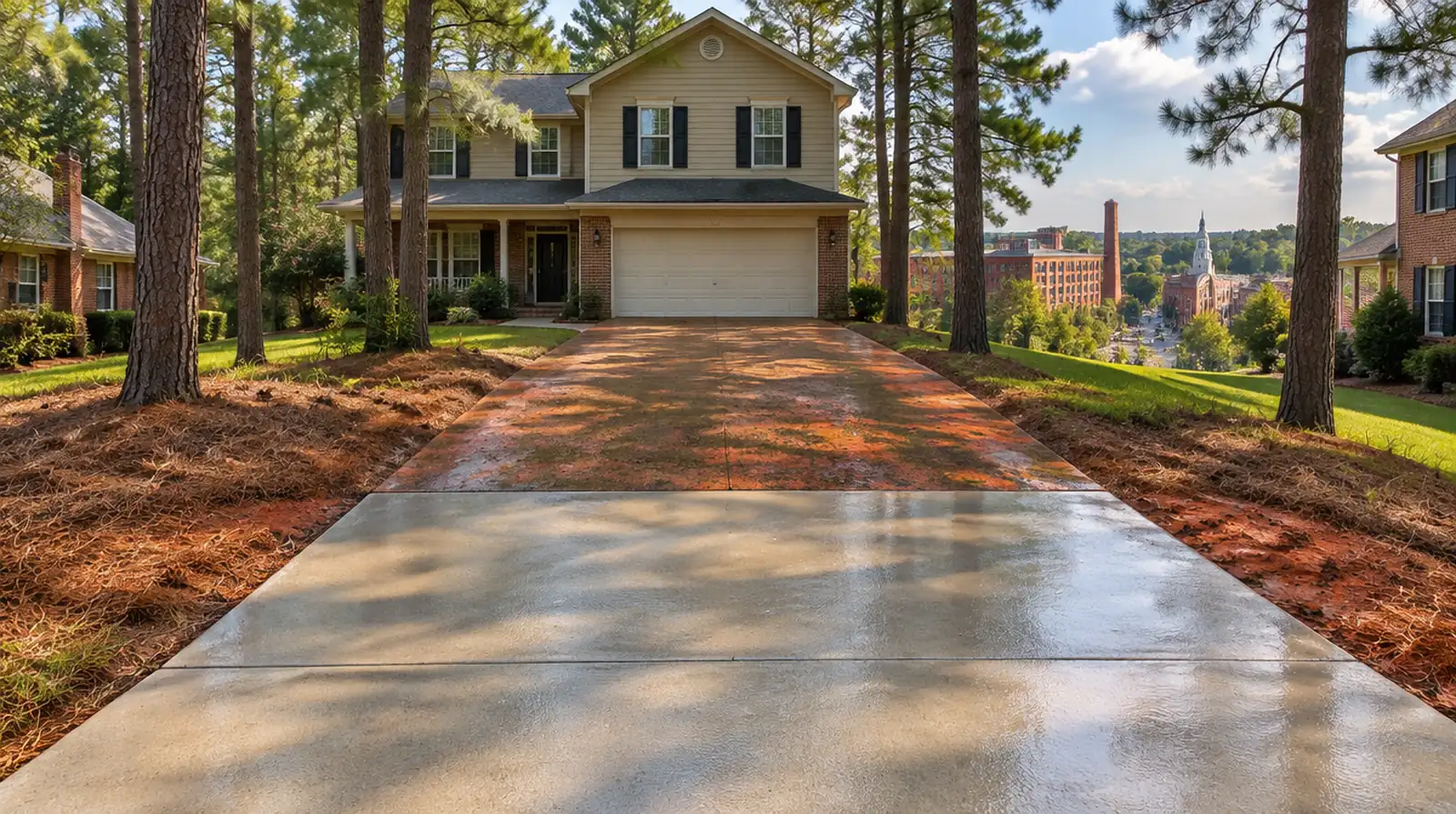
What wears a driveway down
A concrete driveway in the Piedmont deals with a lot. Storm runoff carries red clay across the surface and leaves orange stains. Shade from pine and oak trees keeps parts of the slab damp, which invites black mildew and green algae. Cars drip oil and transmission fluid. Tree roots and shifting clay soils open cracks, and the occasional hard freeze can flake off the surface where water has soaked in. Over time, the driveway goes from bright and clean to blotchy and tired.
Our process
- Deep cleaning. Hot water pressure washing with surface cleaners, plus treatments for mildew, rust, clay and oil stains.
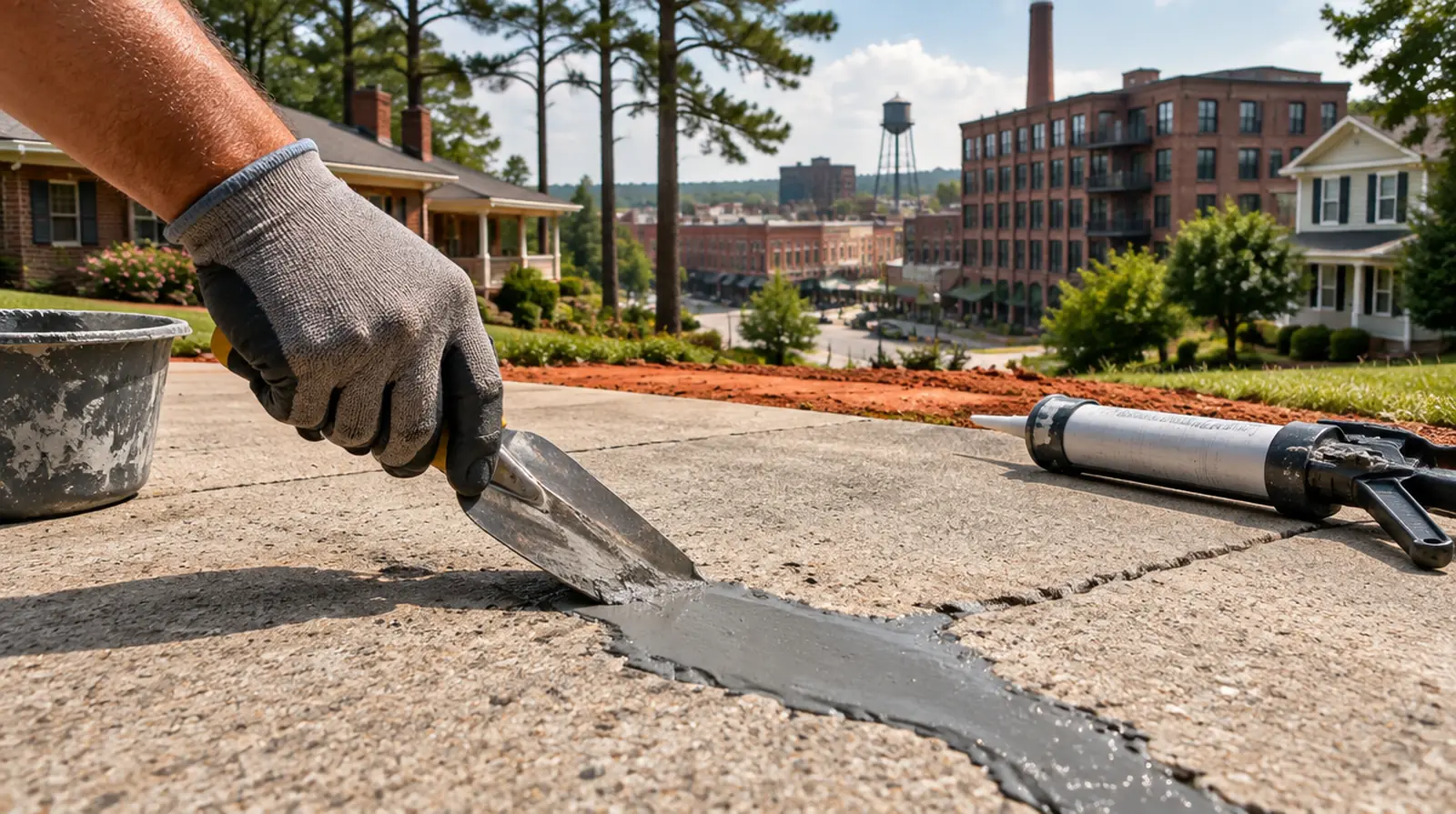
- Crack and joint repair. Cracks are cleaned and filled, and control joints are sealed with flexible caulk to keep water out from under the slab.
- Surface repair. Pitted or flaking areas are patched or resurfaced with a polymer-modified overlay.
- Sealing or coating. A penetrating sealer for a natural look, or a decorative overlay or tinted sealer for a more uniform finish.
Resurfacing
When a driveway has widespread surface scaling, patchwork repairs or mismatched colors, a resurfacer can give it a fresh, even look. Polymer-modified cement overlays bond to sound concrete and can be finished with a broom texture for grip. They can also be tinted. Resurfacing works best on driveways that are structurally solid but cosmetically worn. Large sunken sections, major cracks or crumbling concrete usually need replacement, and we will tell you honestly if that is the case.
Why we avoid glossy coatings outside
Some companies roll epoxy or paint onto driveways. Those products are not designed for direct sun, standing water and vehicle traffic outdoors. They can become slippery when wet, yellow in sunlight and peel under hot tires. For driveways, we recommend penetrating sealers, breathable tinted sealers or cement-based overlays that are made for exterior use and keep good traction.
Stain removal
Not every stain comes out completely, but most improve dramatically. Clay stains respond to specific cleaners that break down iron oxide. Oil stains need degreasers and sometimes poultices that draw oil out of the concrete. Rust from fertilizer, sprinklers and patio furniture has its own treatment. We test on a small area first so you know what to expect.
Value compared with replacement
Tearing out a driveway and pouring new concrete is expensive and disruptive, and it takes weeks before you can drive on the new slab. Cleaning, repair and sealing cost a fraction of that and are usually finished in a day or two. For homeowners getting ready to sell, a fresh-looking driveway is one of the most visible improvements you can make for the money.
Maintenance
Rinse the driveway a few times a year, blow off leaves and pine needles before they stain, and clean oil drips promptly. Reseal every few years, depending on the product and how much sun and traffic the slab gets. Keeping gutters and downspouts pointed away from the driveway reduces clay runoff and mildew.
Walkways and garages too
Many customers have us clean and seal the front walk and patio at the same time, so everything matches. If you are also thinking about the inside of the garage, ask about a garage floor coating. For patios and pool decks, see our concrete sealing page.
Timing the work
Driveway projects depend on dry weather, so we watch the forecast closely and move dates when a storm is coming rather than sealing damp concrete. Spring and fall are ideal, when temperatures are mild and pollen season has passed. In summer we start early so sealers are not applied to a slab that has been baking in the sun all afternoon. You will get a heads-up the day before so cars can be moved and sprinklers turned off.
to restore your driveway.
Call (839) 275-5455 for a free estimate.