How concrete is polished
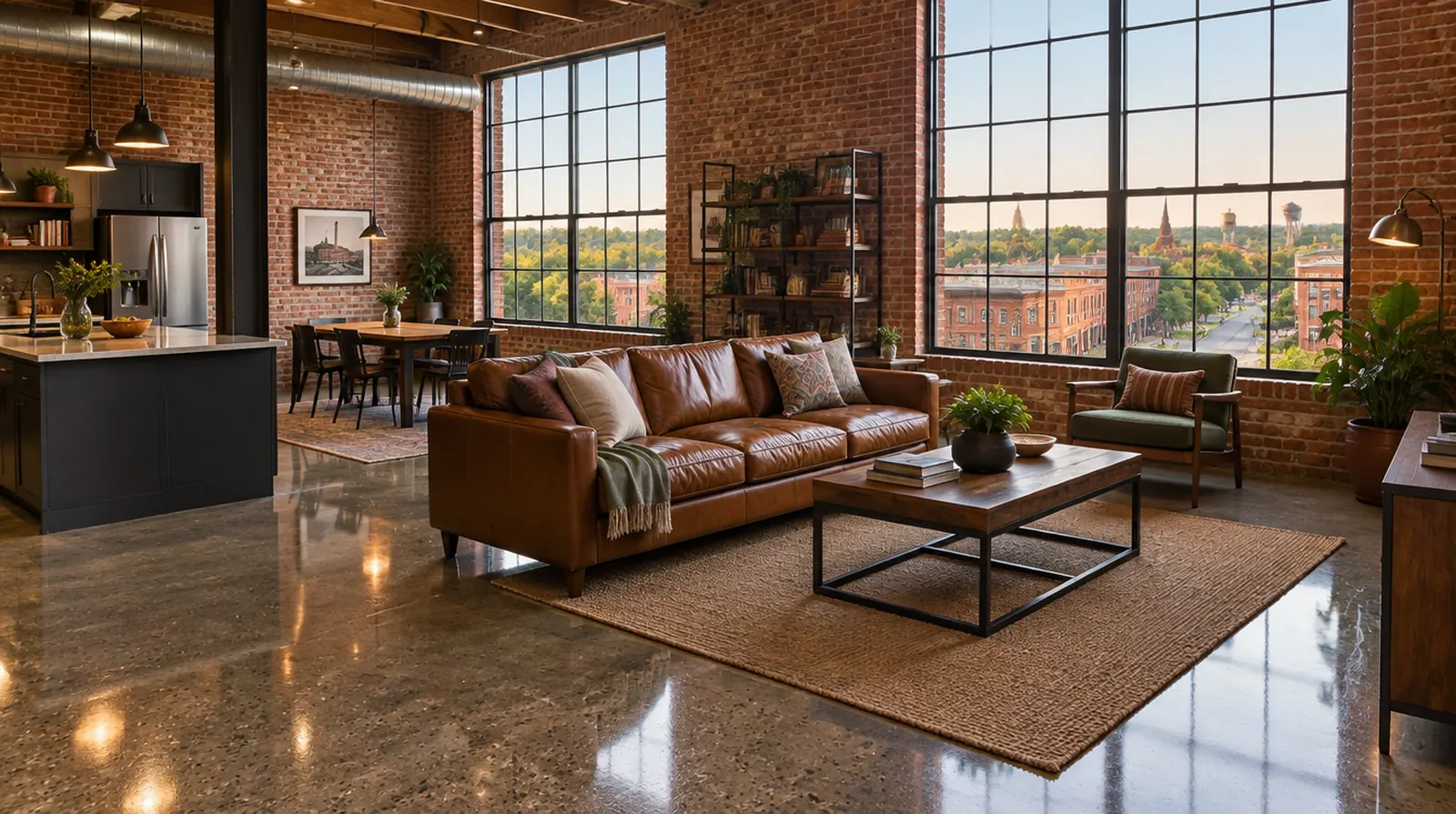
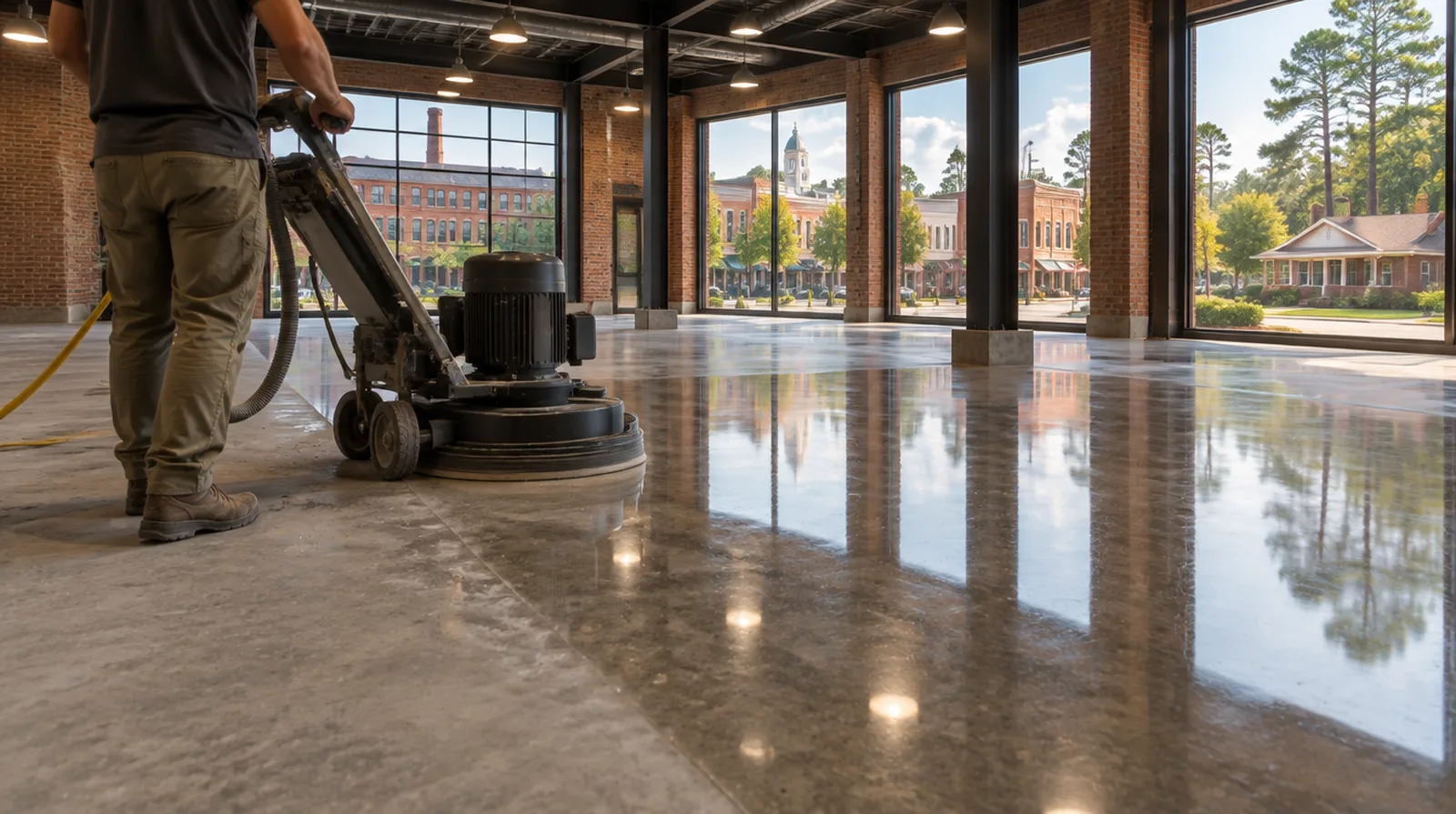
Polishing is a mechanical process, a bit like sanding wood with finer and finer paper. We start with coarse metal-bond diamonds that grind away the top surface, remove stains and flatten high spots. Then we step through progressively finer resin-bond diamonds that smooth and refine the concrete. Partway through, we apply a liquid densifier that soaks into the slab and reacts with the concrete to harden it. The final passes bring up a sheen that ranges from a soft satin to a mirror-like gloss, depending on how far we go.
Because the shine comes from the concrete itself, there is no film on top to peel, chip or wear through. A guard or stain protection treatment is usually added at the end to help resist spills.
Choosing a look
- Cream finish: very light grinding that keeps the smooth top layer with little or no stone showing.
- Salt and pepper: a little deeper, revealing fine sand and small aggregate.
- Exposed aggregate: the deepest grind, showing the larger stones in the mix for a terrazzo-like effect.
Gloss levels run from matte to high reflective. We can also add dyes for warm browns, grays, blues or black, or cut decorative lines and borders into the surface.
Where polished concrete works well
Old mill buildings that have been turned into lofts, offices and restaurants are perfect candidates, because they often have thick, solid slabs with lots of character. New retail stores, warehouses, gyms, schools and church fellowship halls also benefit from polished floors that handle heavy traffic with very little upkeep. In homes, polished concrete is popular in modern builds, basements and slab-on-grade houses where owners want a clean, minimal look.
Honest limits
Polishing reveals the slab as it is. Old cracks, patches, tile adhesive scars and color variation will show through, though grinding can reduce many of them. That character is part of the charm for many customers, but if you want a perfectly uniform look, a coating may be a better fit. Polished floors are also less slip-resistant than textured coatings when wet, so we pay attention to entries and wet areas. Very soft, damaged or thin concrete may not polish well, and we will tell you if that is the case.
Low maintenance, long life
Daily care is just dust mopping and occasional damp mopping with a neutral cleaner. Commercial spaces can use an auto scrubber with a soft pad. Unlike vinyl or waxed floors, there is no stripping or rewaxing. Over many years the gloss can fade in high-traffic lanes, and a quick re-burnish or light polish restores it. Many commercial polished floors last for decades with this simple routine.
Energy and light
A polished floor reflects a surprising amount of light. In warehouses and big-box spaces, that can mean brighter aisles with the same fixtures. In homes, a polished slab on the ground floor pairs well with radiant heating and stays cool in the summer, which is a real advantage in a hot, humid climate.
Polished concrete or coating?
If you want a natural stone look, low long-term maintenance and nothing that can delaminate, polishing is a great choice. If the floor will see harsh chemicals, needs to hide lots of damage, or must be very slip-resistant, consider commercial epoxy or a flake system. Many projects use both, with polished concrete in customer areas and coatings in the back of house.
What to expect
After a site visit, we will test a small area if needed to show you what the slab looks like once ground. Projects are scheduled based on size and finish level, and most residential rooms are completed in two to four days. Furniture and fixtures need to be cleared before we begin. Commercial projects are planned around your opening date or operating hours.
to see what your slab can become.
Call (839) 275-5455 for a free estimate.