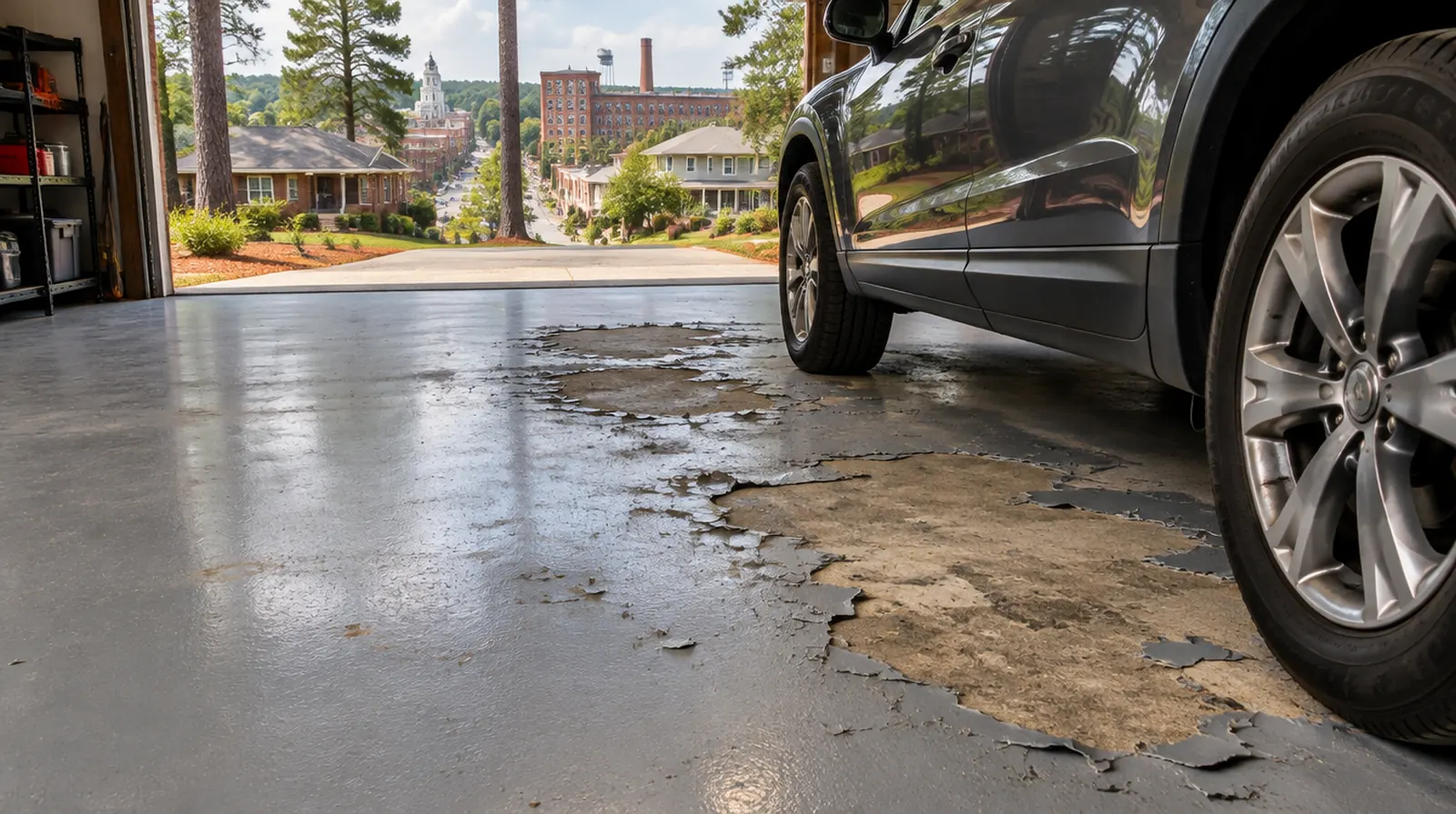
Common problems we fix
- Hot tire pickup: the coating lifts where tires park, often in strips that follow the tread.
- Peeling and flaking: large patches let go, usually due to poor surface prep.
- Blistering: bubbles that form when moisture or vapor pushes up from the slab.
- Yellowing: older epoxy without a UV-stable topcoat turns amber in sunlight.
- Chips and gouges: damage from dropped tools, jack stands or moving heavy equipment.
- Worn traffic lanes: dull, scratched paths where the topcoat has worn through.
Diagnosis comes first
Patching a symptom without understanding the cause usually means the problem comes back. When we look at a failed floor, we check how well the remaining coating is bonded, test the slab for moisture, look for contamination like oil or old sealer, and examine how thick the original coating was. A floor that was rolled over smooth, unground concrete will keep failing no matter how many patches it gets. A floor that is well bonded but worn in one area can often be repaired locally.
Around here, we commonly find big box store kits that were applied over etched concrete, builder-applied sealers that were coated over, and floors installed on humid summer days without moisture checks. Each one needs a slightly different fix.
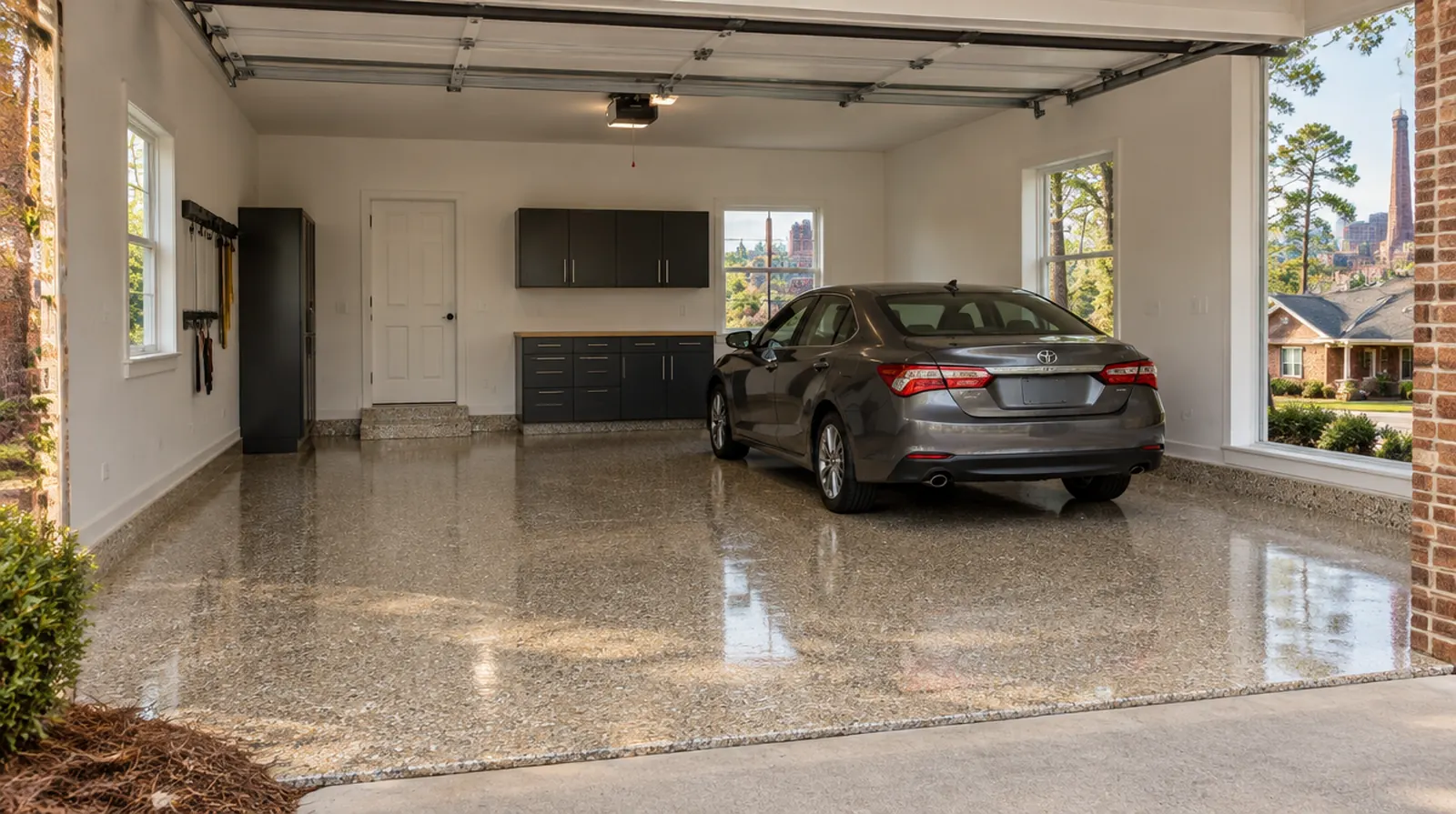
Repair options
Spot repair. When the coating is well bonded overall, we can grind out damaged areas, feather the edges, fill chips and gouges, and blend the repair. Flake floors hide spot repairs especially well.
Recoat. If the base system is sound but the topcoat is scratched, dull or yellowed, we scuff-sand the surface and apply a new clear topcoat, often a UV-stable polyaspartic.
Full removal and replacement. When a coating is widely delaminated, blistered or contaminated, the only reliable fix is to grind it all off down to sound concrete and start over with proper prep and a new system. It takes more work, but it is the only way to get a floor that lasts.
Removing old coatings
Grinding off a failed coating is dusty, noisy work if done carelessly. We use heavy diamond grinders with aggressive tooling and industrial vacuums to keep dust contained. Thick multilayer coatings may require multiple passes or specialized tooling. Once the old material is gone, we inspect the bare concrete, repair any damage, and test for moisture before building the new floor.
Concrete damage under the coating
Sometimes the coating is not the only issue. Spalled concrete, wide cracks, settled sections and crumbling edges near the garage door all need attention before a new coating goes down. We fill and rebuild these areas with epoxy or polymer repair mortars and grind them flush. Moving cracks are treated with flexible fillers so they do not telegraph through the new finish.
Commercial repairs
In warehouses and plants, forklift traffic, chemical spills and impact damage wear coatings unevenly. We repair damaged zones, refill joints, and recoat traffic lanes with minimal downtime, often working nights or weekends. Restaurants with failing kitchen floors can be repaired in sections to keep the operation running.
Preventing future failure
Every repair or replacement we do follows the same rules: grind the surface, test moisture, choose the right primer, build the correct thickness and finish with a durable topcoat. That is what keeps a floor from failing again. For a whole new look rather than a fix, consider a flake floor or a fast polyaspartic system.
Getting started
Send us photos of the damage along with a rough idea of when the floor was coated and what product was used, if you know. We will tell you whether it looks like a spot repair, recoat or full replacement, then confirm with an in-person visit and a written quote.
to have your floor checked.
Call (839) 275-5455 for a free estimate.